
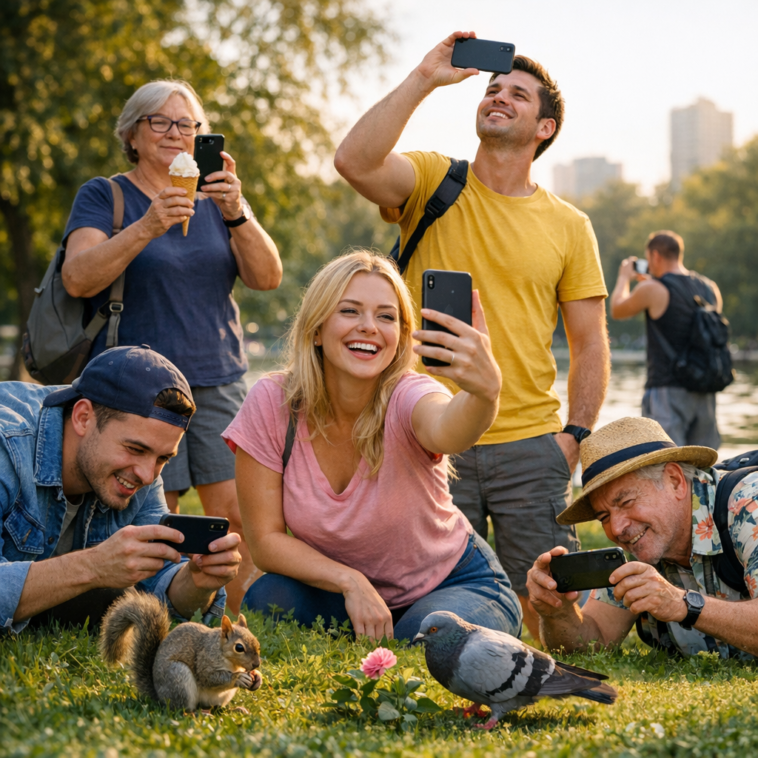
One person gets a new phone.
They don’t announce it loudly. No fireworks. Just a calm message in the group chat:
“Guys, I got a new phone 🙂”
Within 12 minutes, they’ve already taken 47 photos of absolutely nothing.
A coffee cup.
A wall.
The same coffee cup, but now from a “better angle.”
A plant that has never asked for this level of attention.
Then something strange happens.
They suddenly become a photographer.
Not “I take pictures sometimes” photographer. No.
A visionary documentary artist capturing light and emotion through everyday existence photographer.
They start saying things like:
- “Wait, the lighting is not right.”
- “Don’t move, this is natural candid energy.”
- “This lens is insane bro, look at the texture of reality.”
Meanwhile, everyone else in the group chat is watching their phone storage slowly die for art.
The real transformation hits when they discover portrait mode.
Now every object has a dramatic backstory.
A sandwich becomes “street food culture study #1.”
A shoe on the floor becomes “urban loneliness series.”
A selfie becomes a 38-minute production involving chin angles, soft shadows, and existential reflection.
At some point, they start rejecting perfectly normal photos.
Friend: “This one is good.”
New phone owner: “No… the depth feels emotionally dishonest.”
And the final stage is inevitable.
They open Instagram, create a folder called “Selects,” and suddenly behave like they are curating an exhibition in Paris—while standing in their bedroom in pajamas.
But the truth is simple:
It’s not photography.
It’s just the new phone camera finally convincing them that their life is visually interesting.