
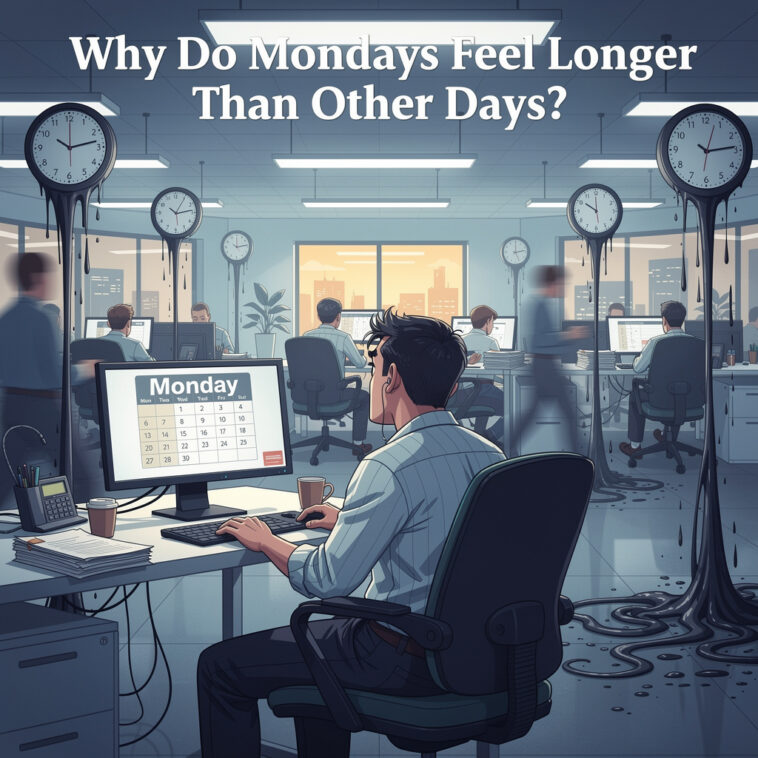
Scientists have tried to explain it. Psychologists have studied it. Employees have suffered through it.
And yet one mystery remains unsolved:
Why does Monday feel like it has 72 hours packed into a single morning?
No one has proof. But everyone has experienced it.
Step 1: The Sunday Illusion
Sunday night is peaceful.
Too peaceful.
You tell yourself:
“Tomorrow will be fine.”
This is the first lie of the week.
Because somewhere between falling asleep and waking up, time undergoes a suspicious transformation.
Step 2: Monday Arrives With Extra Weight
You wake up.
You check the clock.
It says Monday.
Instantly, gravity increases by 30%.
Even your thoughts feel like they need permission to move.
Getting out of bed feels like negotiating a contract with reality.
Step 3: The Slow Motion Morning
Everything on Monday operates differently:
- Alarm: louder than usual
- Shower: longer than necessary but still late
- Clothes: mysteriously harder to choose
- Keys: temporarily invisible
Time is clearly moving, but not in a way that benefits you.
Step 4: The Clock Betrayal
You check the time.
It’s 9:12.
You feel like you’ve already lived three separate lives.
You check again 5 minutes later.
It’s still 9:12.
Monday has entered time distortion mode.
Step 5: The Email Avalanche
You open your inbox.
And suddenly:
- 47 unread emails
- 12 “urgent” messages
- 3 people asking things that could have waited
- 1 mysterious “just following up” from Friday that grew stronger over the weekend
It’s like the internet was resting… and Monday decided to wake it up aggressively.
Step 6: The Productivity Expectation Problem
Monday has expectations.
Too many expectations.
People believe you should:
- be focused
- be energetic
- be organized
- have a plan for your life
Meanwhile, you are just trying to remember how keyboards work.
Step 7: The Meeting Time Warp
Monday meetings are especially powerful.
A “quick 30-minute meeting” becomes:
- 1 hour discussion
- 1 philosophical debate
- 1 existential reflection on why meetings exist
You leave the meeting and somehow it is still the same hour of Monday.
Step 8: The False Hope of Afternoon
At some point, you think:
“Okay, the day is almost over.”
Wrong.
Monday hears this and responds:
“Not even close.”
Afternoon becomes a slower version of morning, but with more tiredness.
Conclusion
Monday does not feel longer because it is longer.
It feels longer because:
- time slows down emotionally
- tasks multiply spiritually
- and your energy leaves the chat immediately
By Tuesday, reality returns.
But Monday always leaves a warning behind:
“See you again in 6 days. I’ll feel even longer next time.”