On paper, it’s simple.
“We just need a few things from the supermarket.”
Three items. Maybe five. A calm, efficient mission.
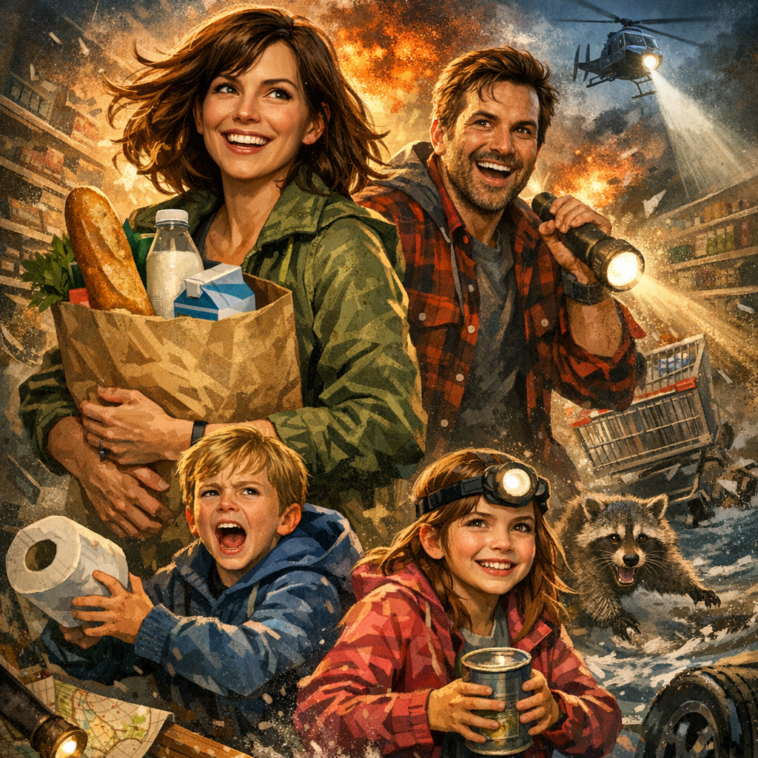
In reality, it becomes a full-scale survival operation with multiple departments, emotional breakdowns, and at least one near-disaster involving snacks.
Phase 1: The Innocent Departure
Everyone leaves the house confident.
There is a list.
There is optimism.
There is a dangerous belief that:
“We’ll be quick.”
This is the same energy people have right before reality intervenes.
Phase 2: The Cart Acquisition Ceremony
The shopping cart looks harmless.
But it is actually:
- a commitment device
- a space expansion system
- and a physical representation of poor impulse control
You place one item inside.
Suddenly there is room for twelve more realities.
Phase 3: The “We Forgot the List” Panic
Somewhere in aisle 2, someone asks:
“What were we supposed to get again?”
Silence.
This is the moment the mission destabilizes.
Now the group relies on:
- memory fragments
- vague feelings
- and one person who confidently says something wrong
Phase 4: Strategic Division of Labor (Accidental Chaos)
People split up “to be faster.”
This is a lie.
Now there are:
- three separate cart paths
- two conflicting interpretations of “cheap milk”
- and someone wandering aimlessly in snacks like it’s their final form
Communication breaks down into:
“Where are you?”
“Near food.”
“Which food?”
“All of it.”
Phase 5: The Snack Incident
It always happens.
Someone puts a “small treat” in the cart.
Then another.
Then another.
The cart begins to develop emotional weight.
You started with vegetables.
Now you are emotionally committed to:
- cookies
- juice that was not planned
- and something labeled “limited edition” that triggers fear-based purchasing
Phase 6: The Price Reality Check
At checkout, the screen displays the truth.
Nobody is ready for it.
Everyone reacts differently:
- silent staring
- fake coughing
- sudden interest in pockets
- strategic blame shifting (“we didn’t need THAT many snacks”)
The cart is now a financial autobiography of poor decisions.
Phase 7: The Loading Struggle
Back at home, unloading begins.
This is where betrayal is revealed.
You discover:
- duplicates of items no one remembers buying
- mysterious products with unclear purpose
- and at least one item that feels emotionally unnecessary but legally purchased
Someone says:
“Why did we get this?”
No one knows.
We all agreed. Somehow.
Final Phase: Recovery and Denial
After the mission, everyone is tired.
But instead of resting, you do the final ritual:
“We should’ve just gone for the things on the list.”
This will be ignored next time.
Because grocery trips are not about shopping.
They are about:
- teamwork under confusion
- budget denial therapy
- and proving that no list survives first contact with a supermarket
And yet…
a few days later, someone says again:
“We just need a few things.”
And the cycle begins anew.