
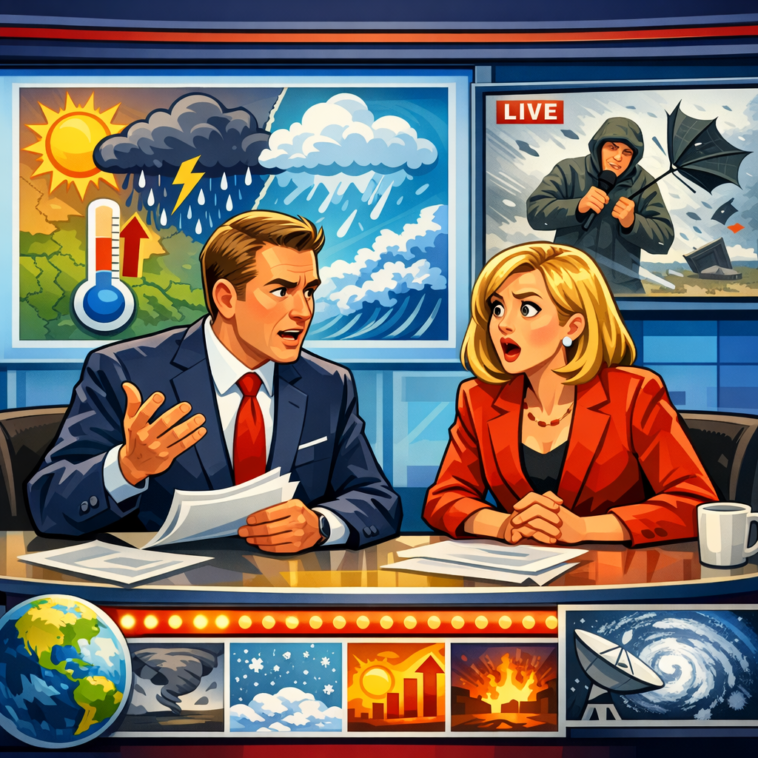
Welcome to the most important topic in human civilization:
The weather.
Not politics. Not science. Not your actual problems.
The weather.
A subject so universal that it allows two strangers to act like meteorological journalists with absolutely no qualifications.
Step 1: The Breaking News Voice
Never say:
“It’s hot.”
Instead say:
“It appears we are currently experiencing unusually high temperatures…”
Add a serious tone. Slight head tilt. Optional squint.
You are now a field reporter stationed outside your own front door.
Step 2: Add Unnecessary Urgency
Even if it’s just slightly warm, escalate:
“Temperatures have reached levels that can only be described as… concerning.”
Nobody asked for data.
But now it sounds like a national emergency involving the sun.
Step 3: Include Eyewitness Reporting
This is where small talk becomes journalism.
“People in the area are seen fanning themselves aggressively.”
You are “people in the area.”
But framing it like a global observation makes it 40% more credible.
Step 4: Introduce Dramatic Contrast
To elevate the story, compare it to something unrelated:
“Earlier this morning, conditions were relatively stable…”
What does “stable weather” even mean?
No one knows.
But it sounds official.
Step 5: Add a Forecast Nobody Requested
Confidently predict the future:
“Experts suggest conditions may remain unchanged… or possibly worsen.”
You are now both reporter and unnamed expert.
No sources needed.
Sources are emotional confidence.
Step 6: Interview the Audience
Turn the conversation into live coverage:
“How are you coping with these conditions?”
The other person has no choice but to respond like a citizen caught on camera:
“Yeah… it’s hot.”
Congratulations. You now have a breaking quote.
Step 7: The Dramatic Closing Statement
End the weather report properly:
“We will continue to monitor the situation.”
You will not.
You will immediately go inside, drink water, and forget everything.
But for 30 seconds, you were a global news network.
Bonus: Advanced Weather Journalism Techniques
- Point at the sky like you discovered it
- Say “it’s getting worse” every 10 minutes regardless of change
- Refer to clouds as “developing systems”
- Treat rain like an unexpected plot twist
- Say “unprecedented” even if it happens every year
Final Truth
Discussing the weather isn’t really about the weather.
It’s about:
- filling silence with authority
- turning obvious reality into commentary
- and pretending the sky is breaking news you were personally assigned to report
And somewhere right now, two people are standing outside…
seriously analyzing a light breeze like it’s an international weather crisis unfolding live.